
Turning the rubric into a structured, optional, auditable step — five shared criteria, version history, and AI assistance that accelerates review without removing faculty judgment.
By Huỳnh Minh Phúc·
Most thesis assessment still lives on paper or in a lecturer's head: a sense of whether the content is strong, the structure holds, the method is sound. That works for one advisor and a handful of students. It does not scale across a faculty, and it leaves almost no trail when a grade is questioned. Project Mentor turns the rubric into a structured, optional, auditable step — without taking the judgment away from the lecturer.
When a lecturer grades a submission, they can score it across five criteria:
The score is optional. A lecturer can still simply comment and decide. But when the rubric is used, every student in the faculty is measured on the same explicit dimensions instead of an implicit, advisor-by-advisor standard.
The rubric is not a black box. The scores attach to the specific submission version they were given on, alongside the lecturer's written comments and their decision (Accept / Request change / Discuss). When a student resubmits, the new version carries its own review. The result is a complete, inspectable history of how a thesis was assessed over time — useful for the student, for the coordinator, and for accreditation review later.
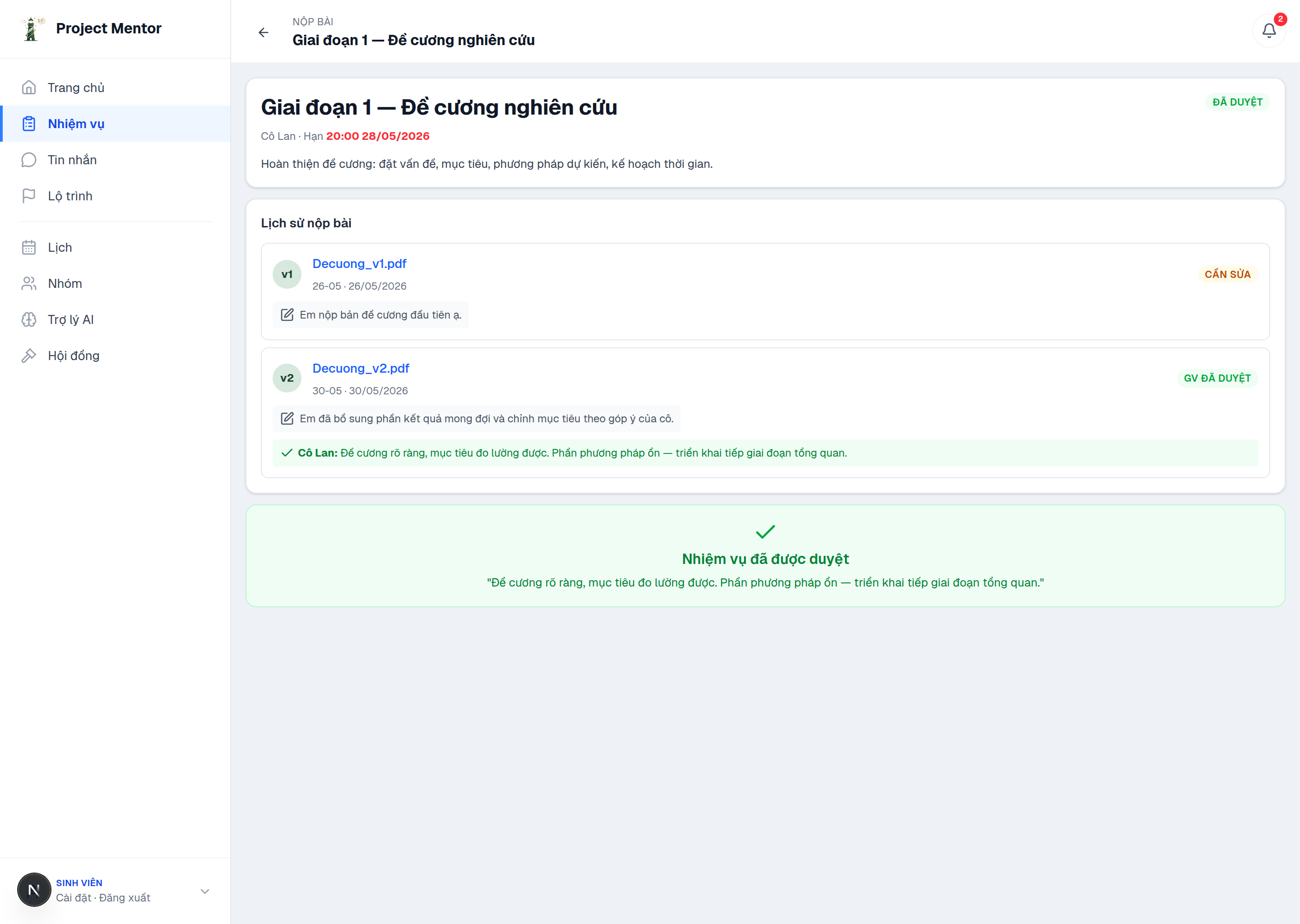
The platform can run an AI pre-check before grading, giving the lecturer a first-pass read of the submission so they are not starting from a blank page. The lecturer can also expand a short note into fuller feedback with AI-suggested feedback. But the rubric scores and the final decision are entered by the human. The AI accelerates the review; it does not make the decision.
The goal is not to mechanise judgment. It is to make a good advisor's judgment consistent, visible, and reusable across a whole faculty.