
A practical walkthrough: clear your dashboard queue, review with AI assistance, decide, and let versioning and snippets remove the repetition.
By Huỳnh Minh Phúc·
If you supervise more than a handful of theses, the hard part is rarely the academic judgment — it is the logistics around it: chasing drafts, remembering what each student changed, writing the same feedback for the tenth time. This is a practical walkthrough of running supervision on Project Mentor so the logistics shrink and your attention goes where it should.
When you sign in as a lecturer, the home screen puts the work that needs you first: submissions waiting to be reviewed, students flagged as needing attention, and a snapshot of where everyone is.
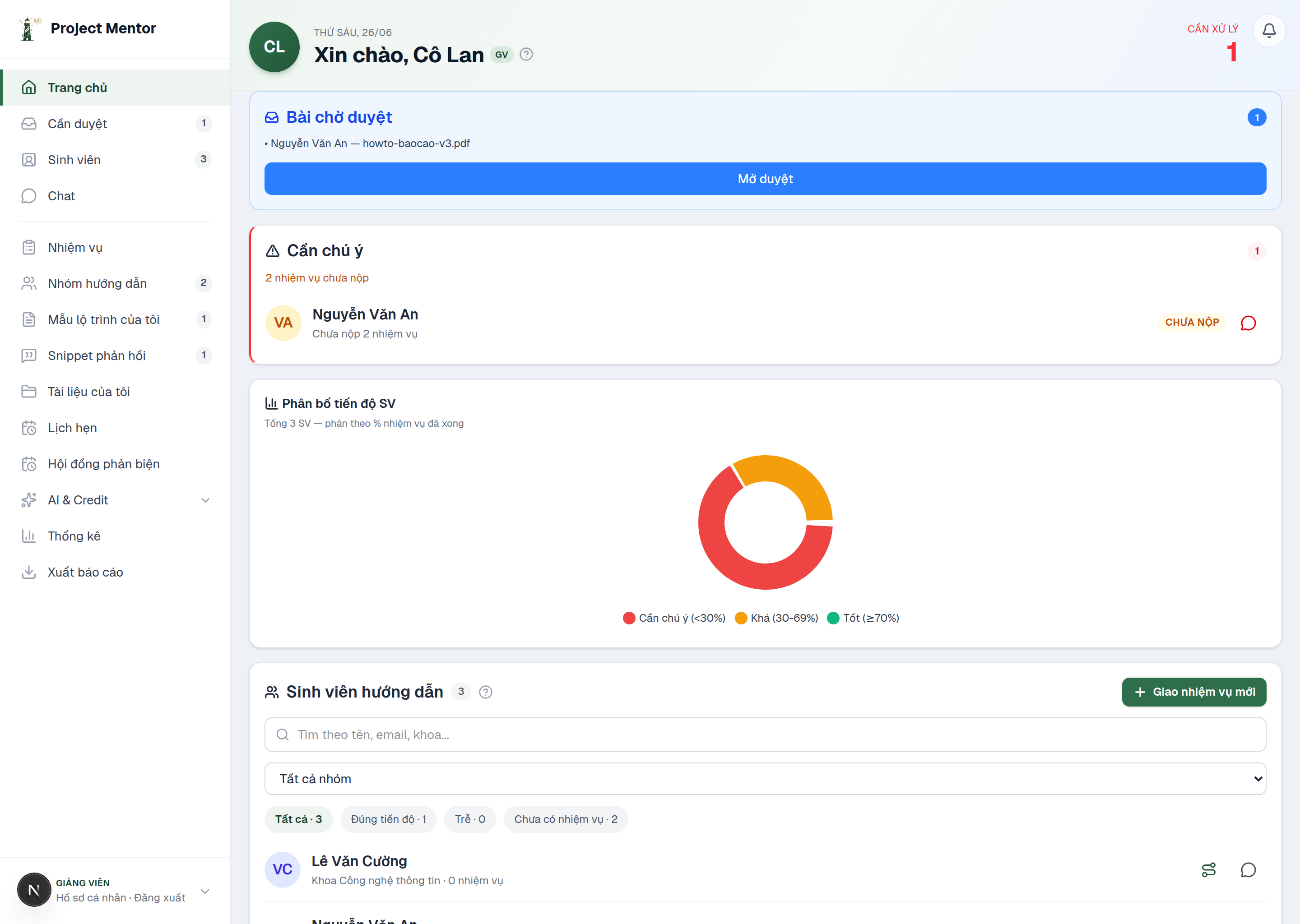
Treat this as your daily queue. If the dashboard is clear, your students are not stuck waiting on you.
Create a task with a title, description, and deadline, and assign it to a student or a group. Tasks are the unit of work the student sees on their side, so be specific — "Chapter 3: methodology, with a diagram of the architecture" beats "keep going."
Open a submission from your review inbox. Before you write anything, you can run an AI pre-check for a first-pass read. As you write feedback, AI-suggested feedback can expand a one-line note into clear comments you then edit. When you are ready, choose one of three decisions:
Optionally, score the five-criteria rubric. The AI drafts; you decide and own the result.
Students submit by version (v1, v2, v3…). Open the timeline to see exactly what changed since last time instead of re-reading the whole document. This is the single biggest time-saver in a long supervision cycle.
Two features stop you from re-typing:
Use 1-to-1 chat for quick questions between meetings, and create groups with a shared roadmap when several students work the same topic or as co-supervisors.
Sign in → clear the dashboard queue → review with AI as a starting point → decide and (optionally) score → let versioning and snippets remove the repetition. The platform handles the chase-and-track; you handle the judgment. That division of labour is the whole idea.