
How the transparent risk score — overdue tasks, submission gaps, rejection rate, engagement — lets a coordinator intervene in week 4, not week 14.
By Huỳnh Minh Phúc·
The students who fail a thesis season rarely fail at the defence. They fail quietly, weeks earlier — a missed deadline here, a draft never submitted, a supervisor they stopped talking to. By the time it is visible, it is often too late to recover. Project Mentor gives coordinators an early-warning signal so the intervention happens while it still matters.
For a faculty coordinator, the at-risk view ranks students by a transparent risk score. The score is not a vague AI guess — it is computed from concrete behavioural signals:
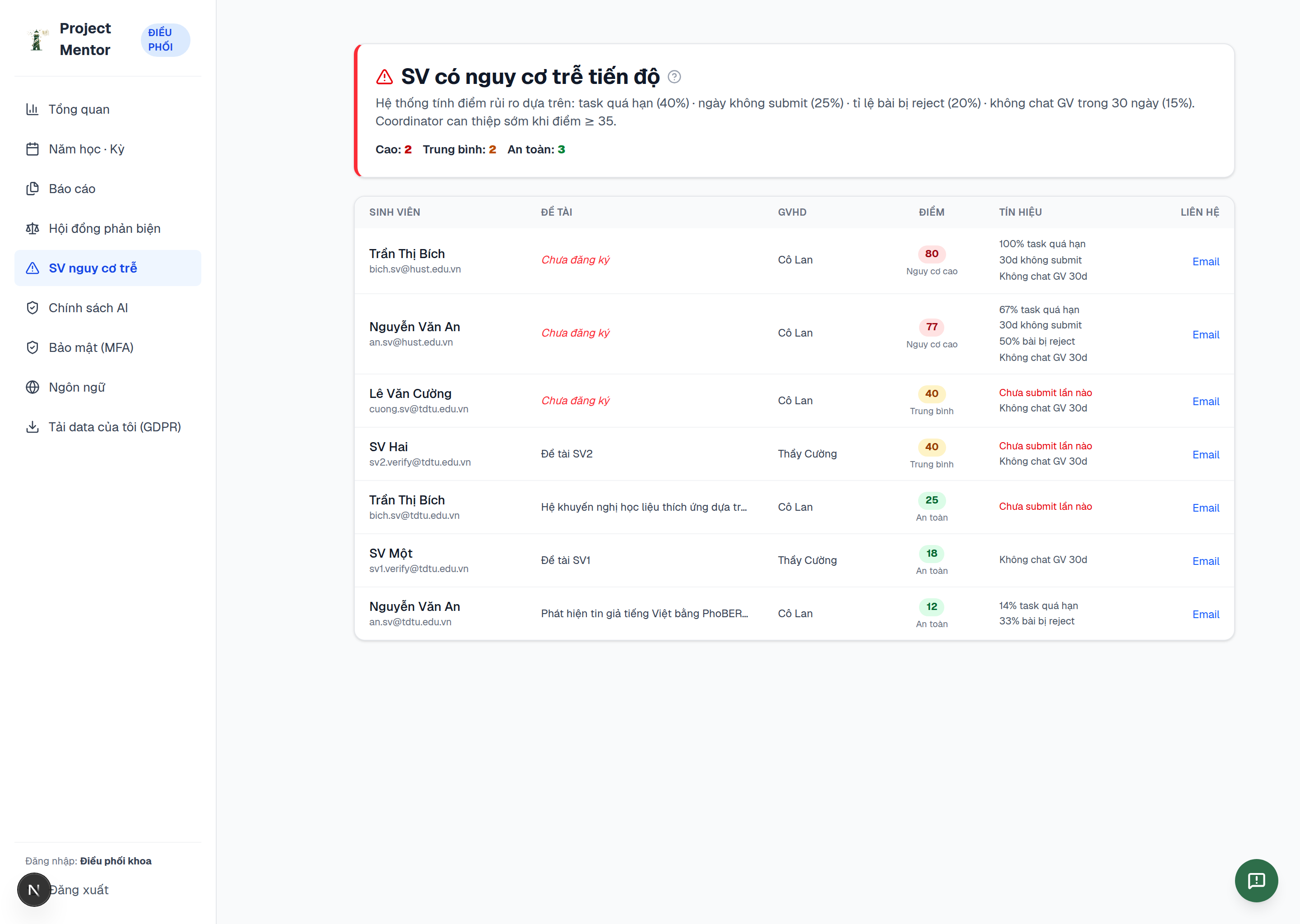
Students are grouped into clear bands — high risk, medium, safe — so a coordinator can see at a glance who needs attention this week.
Because the score is built from named signals, it is explainable. A coordinator can tell a supervisor why a student is flagged ("100% of tasks overdue, no submission in 30 days, no contact") rather than "the system says so." Explainable risk is actionable risk: it points directly at the conversation that needs to happen.
The risk view is one part of the coordinator's faculty-wide tools — alongside supervisor–student assignment, term management, defence councils, and reports. Together they move a coordinator from reacting at the defence to managing the whole cohort in real time.
A thesis that is going to struggle almost always signals it early. The job is to be looking. This is the instrument that lets a faculty look.